Day 7 of the Narmada Parikrama: an endless road, Dindori and a dead rat
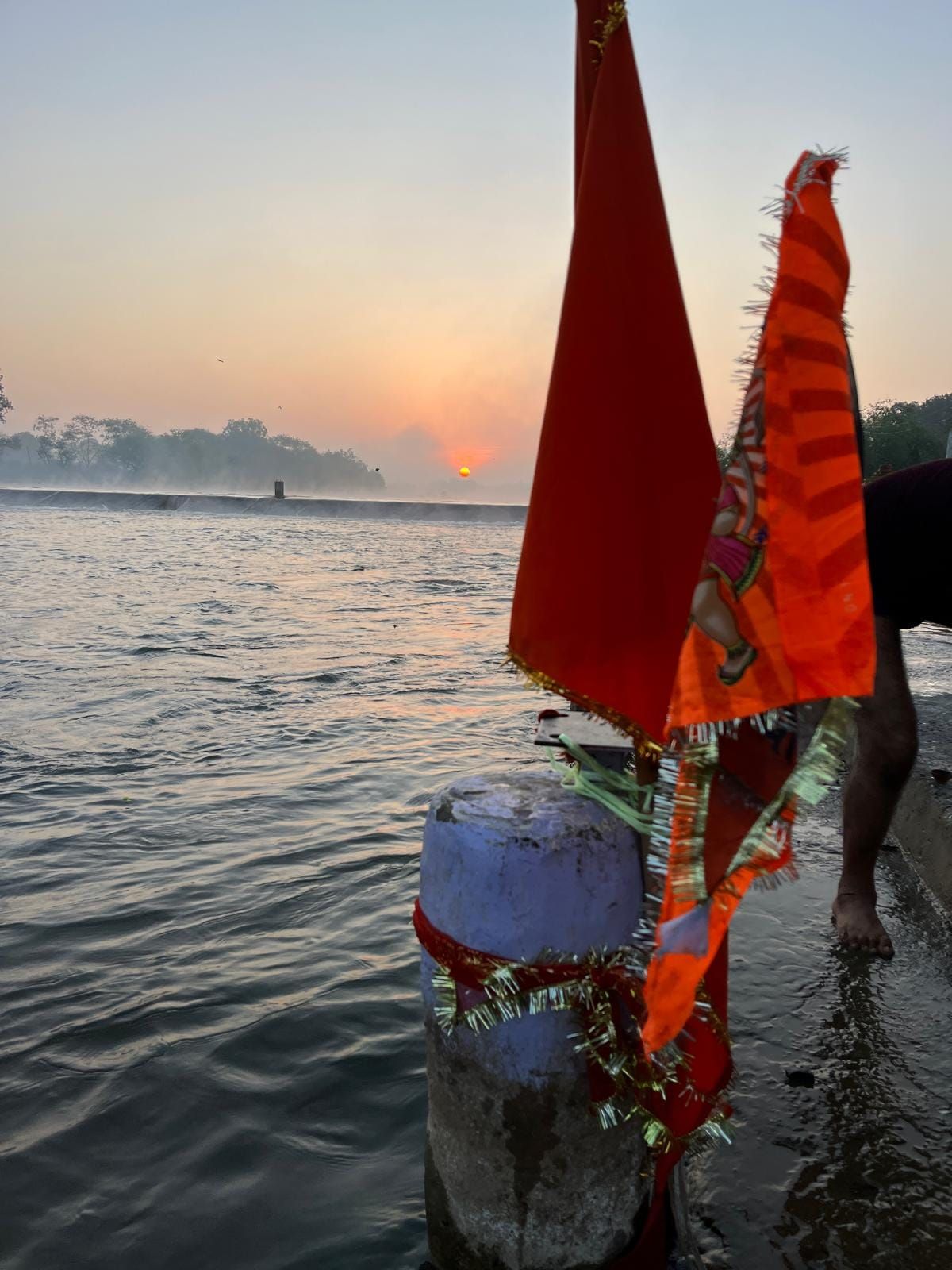
Wow, we've been on the Narmada Parikrama for a week already and have walked 105.95 km in total. How crazy is it, really, that you can adapt to your surroundings so easily, if you let yourself. No meat, no alcohol, no peanut butter (hehehe), no soft mattress, no chair, no table, no home of your own, no food you know, no bed of your own, no toilet you can sit on in peace, no shower. Everything is unfamiliar, and so on and so on. Just the things in your backpack and whatever you're offered.
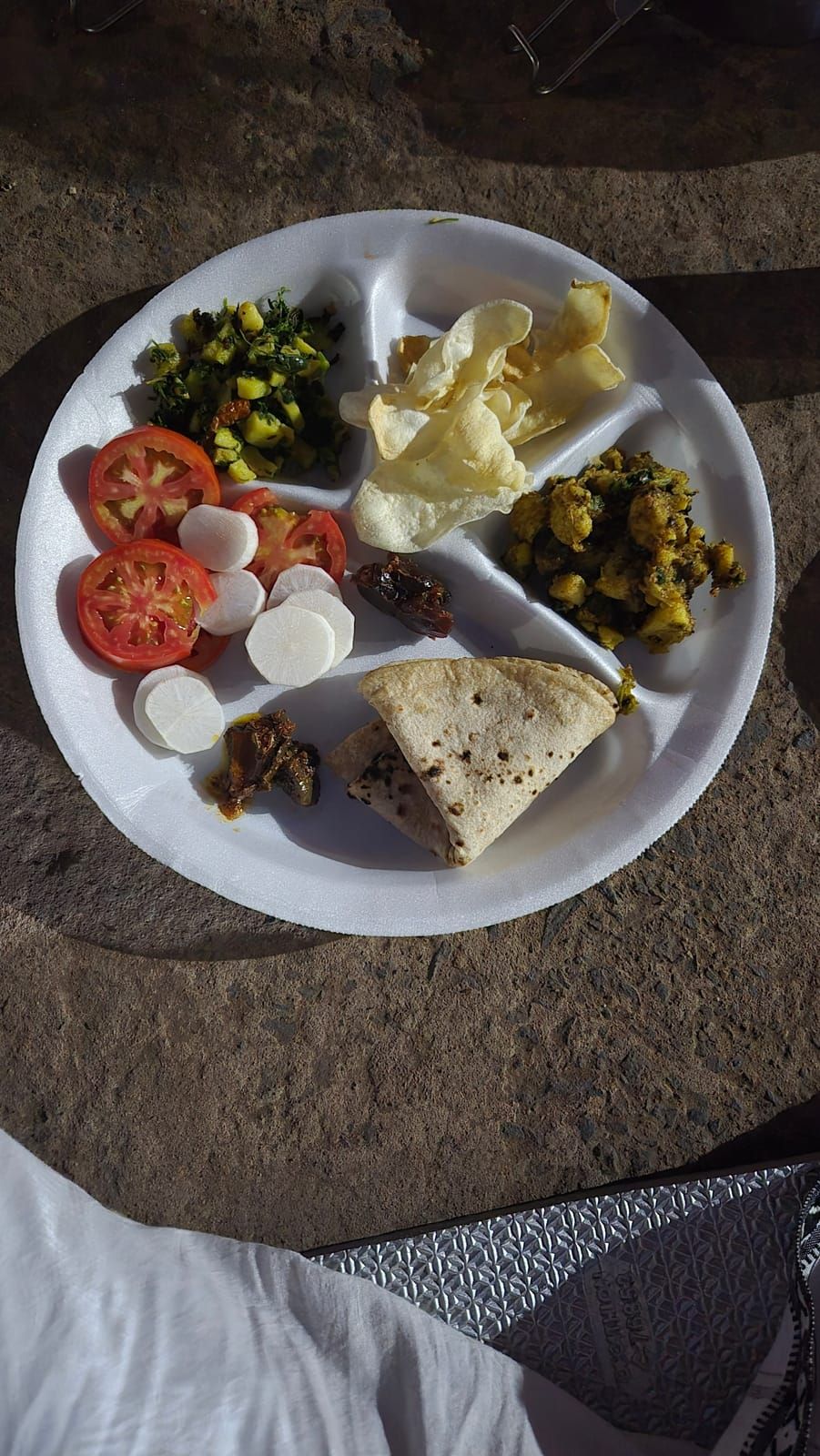
But today was unfortunately a dull stretch, along the main road to Dindori. And no, not like in the Netherlands. These roads look more like a small country road in France, but mostly straight with few bends, which makes the walk feel even longer than it is. Our 18.49 km, especially towards the end, just didn't seem to end.
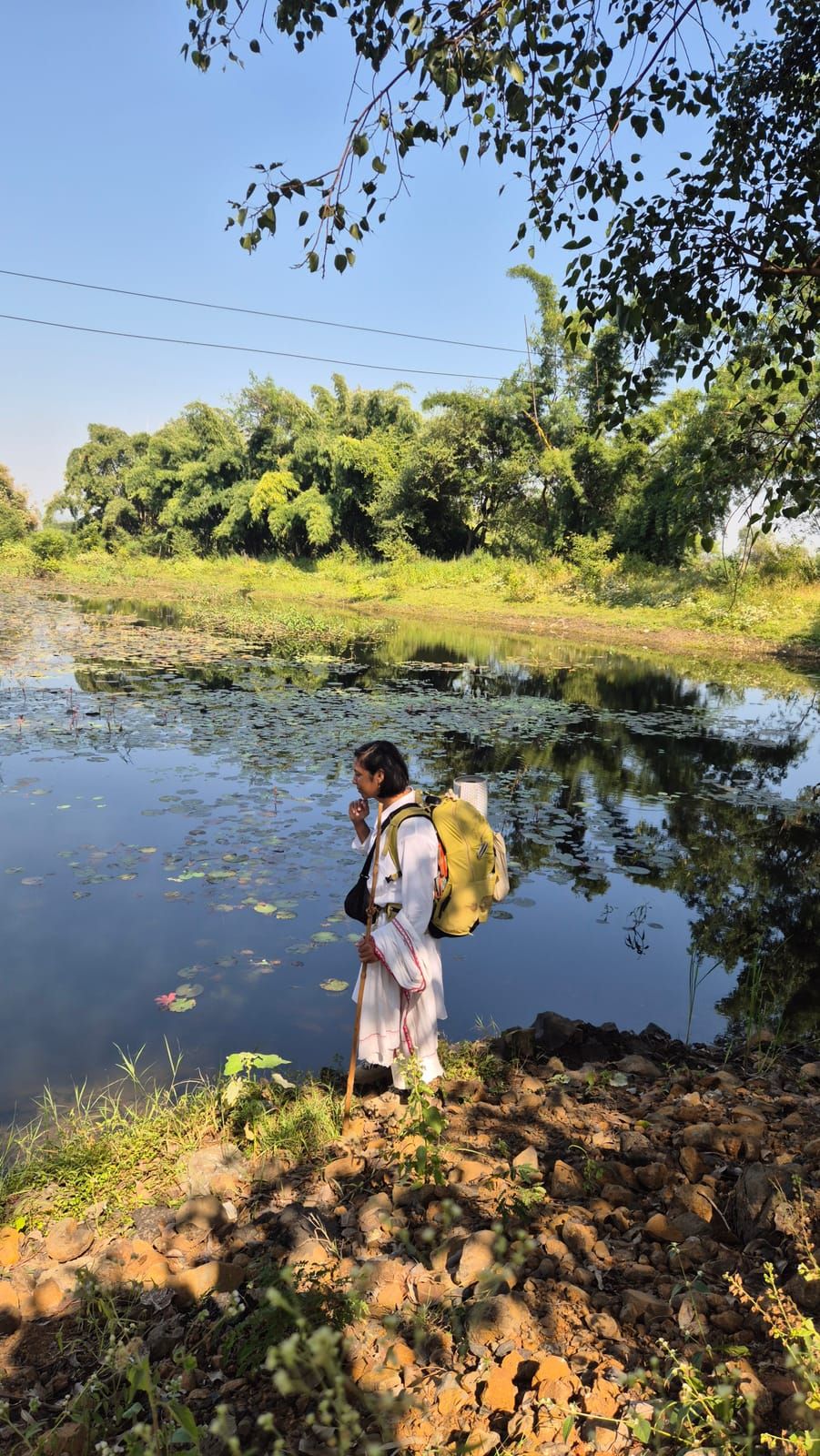
Luckily there was some distraction along the road: beautiful meadows and sometimes big ponds with gorgeous lotus flowers rising out of the water. And of course we kept being offered chai. Over chai we got a lot of unsolicited advice, sometimes lovely stories too, and people asked a lot about our journey. But I had questions of my own: what is life like here, what's going well and what isn't? It quickly turned to the water shortage, few or no jobs for the kids, the enormous corruption, the poor maintenance of the roads, and so on and so on.
One thing strikes me again and again: life here, far from the city, often feels freer. People work together, there's a real community. They just don't always see it that way themselves. Here too the world revolves more and more around money and stuff, and you quickly compare yourself to someone else. I understand that. Who am I, as a Westerner who consciously chooses less, to tell them they should be content?
It isn't easy for the young people either. There's little work, so many young people have no choice but to go to the city. But even in families who own land, where there's always food on the table and the worries are a lot smaller, the young ones still move away. That keeps amazing me.
And then comes that question, again and again: "Europe? Then you're rich!" I always try to put that into perspective a bit. Of course things are better organised in Europe and there's more work. But getting rich? That's not true. Everything there is many times more expensive, and it's often really a work culture. You work, you go home, and before you know it you're on your own.
In the Netherlands a lot of people struggle with depression and loneliness. It exists in India too, especially in the big cities, but people hardly talk about it.
Then I'd rather choose the warmth and the togetherness. Maybe everything here is a bit less well organised, but there's always someone around you. And luckily I also meet people who already know this. Who want nothing to do with the city and wouldn't trade this life for all the gold in the world. They have little, and it's enough.
But I'm digressing. You could discuss this endlessly, and whether I'm right or not… let's just move on. Hahaha.
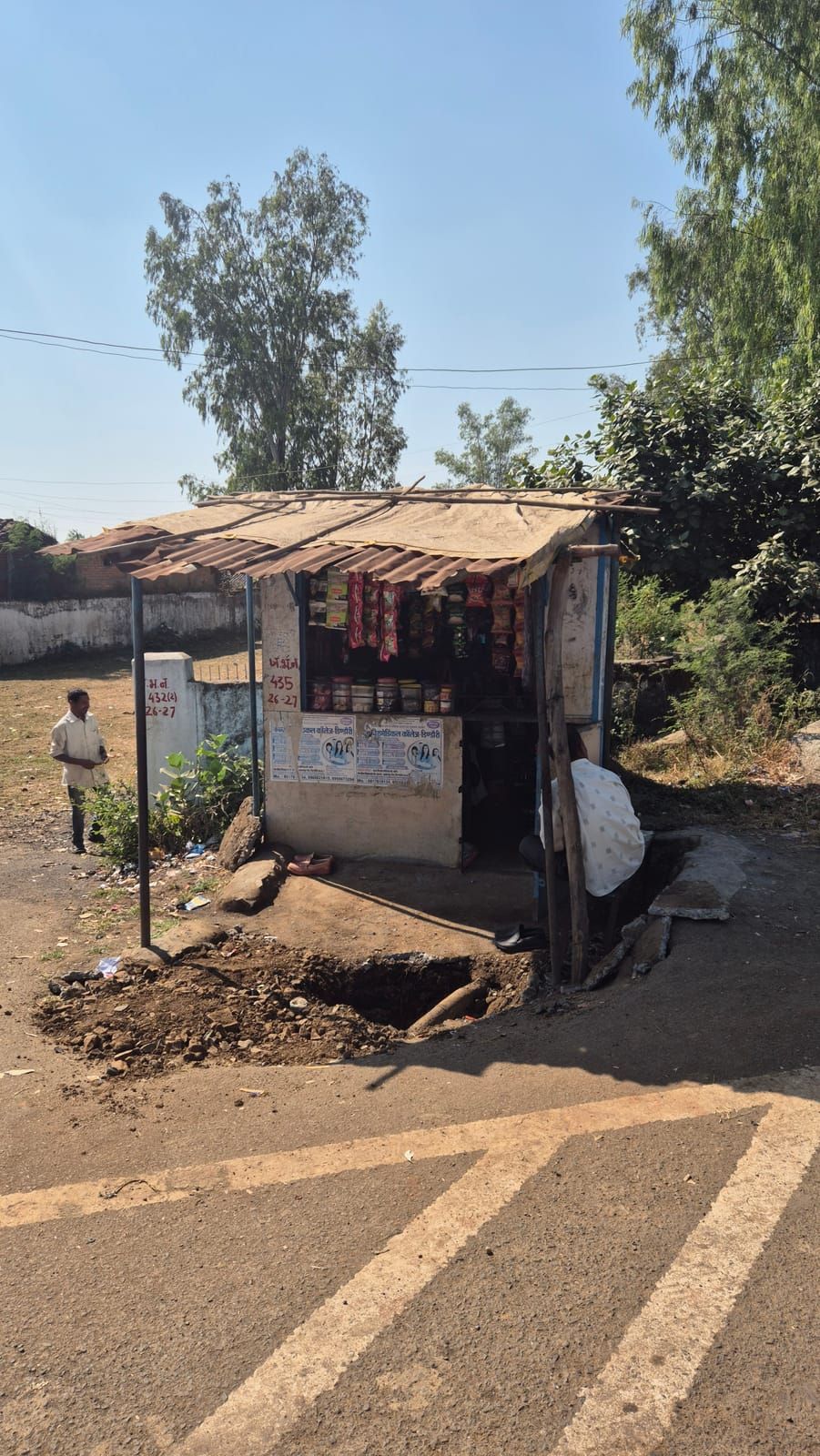
After a few more kilometres of straight road we finally arrived in Dindori, the first town since we started our walk. And that took some adjusting. Suddenly it's busy: honking cars and mopeds, rubbish everywhere. And the smells hit you from all sides: sewage, cow dung, incense, food, pee and diesel, all mixed together. I honestly thought: what on earth have I got myself into? I want out of here, and fast! Hahaha, that's how intense it was.
But we pushed on and walked quickly to the ghat. There lay the Narmada, astonishingly beautiful and clean, completely different from the town behind it.
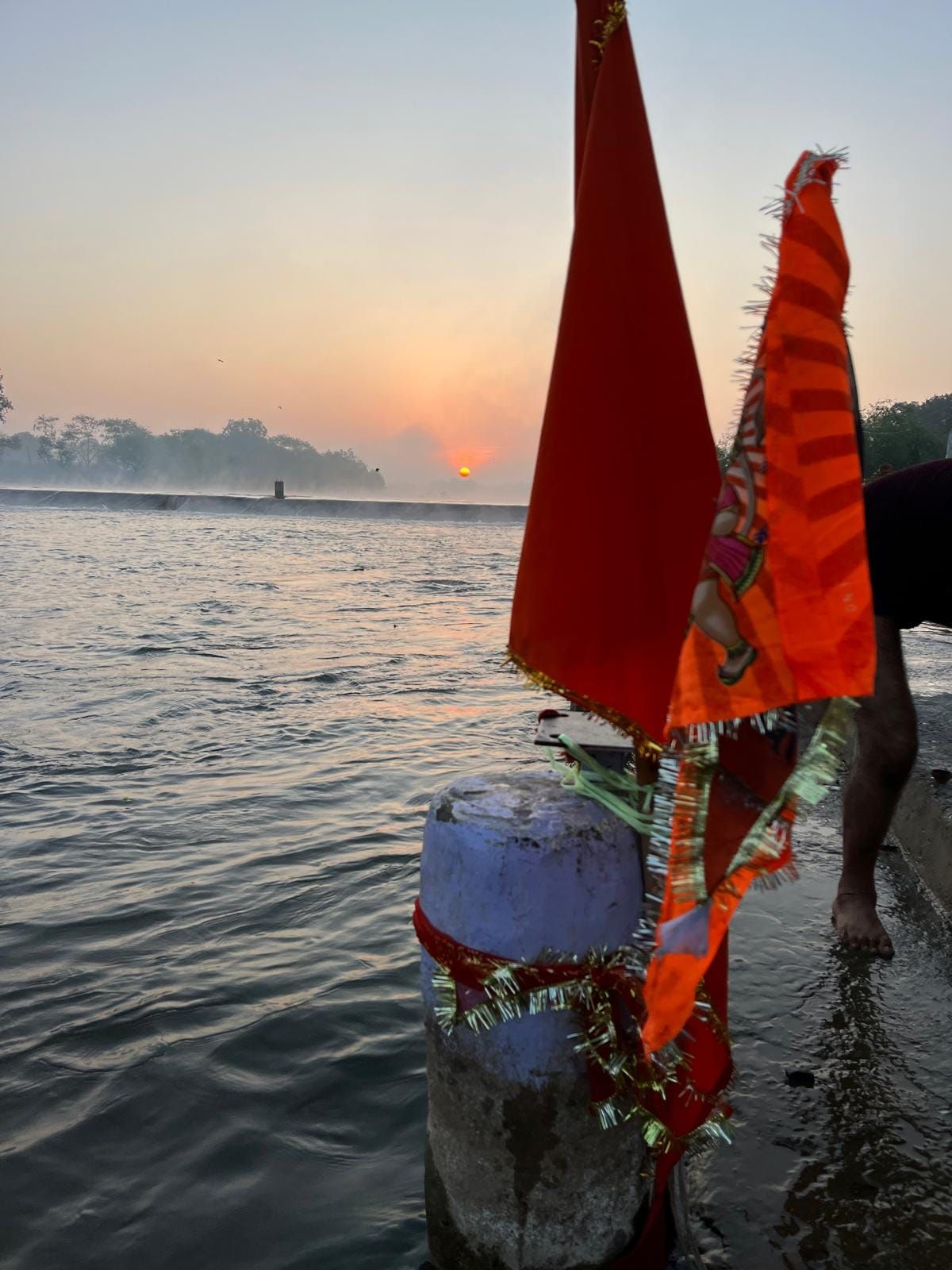
And here too, a little piece of the Chouksey family was waiting for us. Family of family of family, you know how it goes in India. Whether you're a friend, a distant cousin or an acquaintance: if someone says "you have to help these people", they're ready. With the Chouksey's, a word is a word. So there they were, to welcome us with a lovely evening picnic at the ghat. There was puri, all kinds of sabzis again, dal and rice, and delicious sweets for dessert. So we sat by the water, with the racket of the town far behind us.
We're really being spoiled on the Narmada Parikrama, and you won't hear me complaining. And as the icing on the cake, we were also offered a room, by a friend of one of the members of the Chouksey family. A beautiful room where we could spend the night.
The family had warned us about the dharmshala here, you see. A dharmshala is a kind of lodging for pilgrims and poor people, where you pay almost nothing: about 100 rupees, roughly one euro. This one was supposed to be really bad and unhygienic. But we thought: oh well, we've been through so much already, we can take it. We are walking the Narmada Parikrama after all, so we shouldn't sink too deep into all the luxury we're being offered now. Hahaha.
Well… that dharmshala really was that bad. In every room there was a dead rat, or the room was crammed full of junk. And the toilets hadn't been cleaned in years, or at least that's how it looked. At the first dead rat one of the men let out a scream, and Yasha immediately said: "No no, let's go!"
So we accepted the gift after all, as prasad, and this time we slept in that beautiful room in someone's home. Not in the dharmshala.
Maybe that's part of the Parikrama too: not just learning to endure, but also learning to receive. Maa Narmada provides, they say here. That evening, we believed it.
Narmade Har!